ROOTED HERE
Behind the downtown streets.
A whole city’s story.
Three historic communities meet below the San Gabriel foothills. Rancho Cucamonga connects vineyard heritage, Route 66 and neighborhood life across Alta Loma, Cucamonga and Etiwanda.
People made the city.
These milestones are an introduction, not a complete local history. Follow the linked city and museum sources to explore the people and places behind them.Read the local historical account.
- Before incorporation
Separate communities
Alta Loma, Cucamonga and Etiwanda developed distinct settlement patterns. Their buildings, mature trees and former agricultural landscapes remain part of the city's heritage.
City or museum historical source ↗ - Agricultural era
Vineyards and irrigation
Vineyards and citrus cultivation shaped the valley. Water systems, rail connections and farm communities influenced where streets and settlements developed.
City or museum historical source ↗ - After World War II
A growing valley
New housing and commercial development expanded around the older communities during the postwar decades.
City or museum historical source ↗ - 1977
One incorporated city
The three communities joined in the newly incorporated City of Rancho Cucamonga, bringing local planning decisions under city government.
City or museum historical source ↗ - Today
Historic places and local life
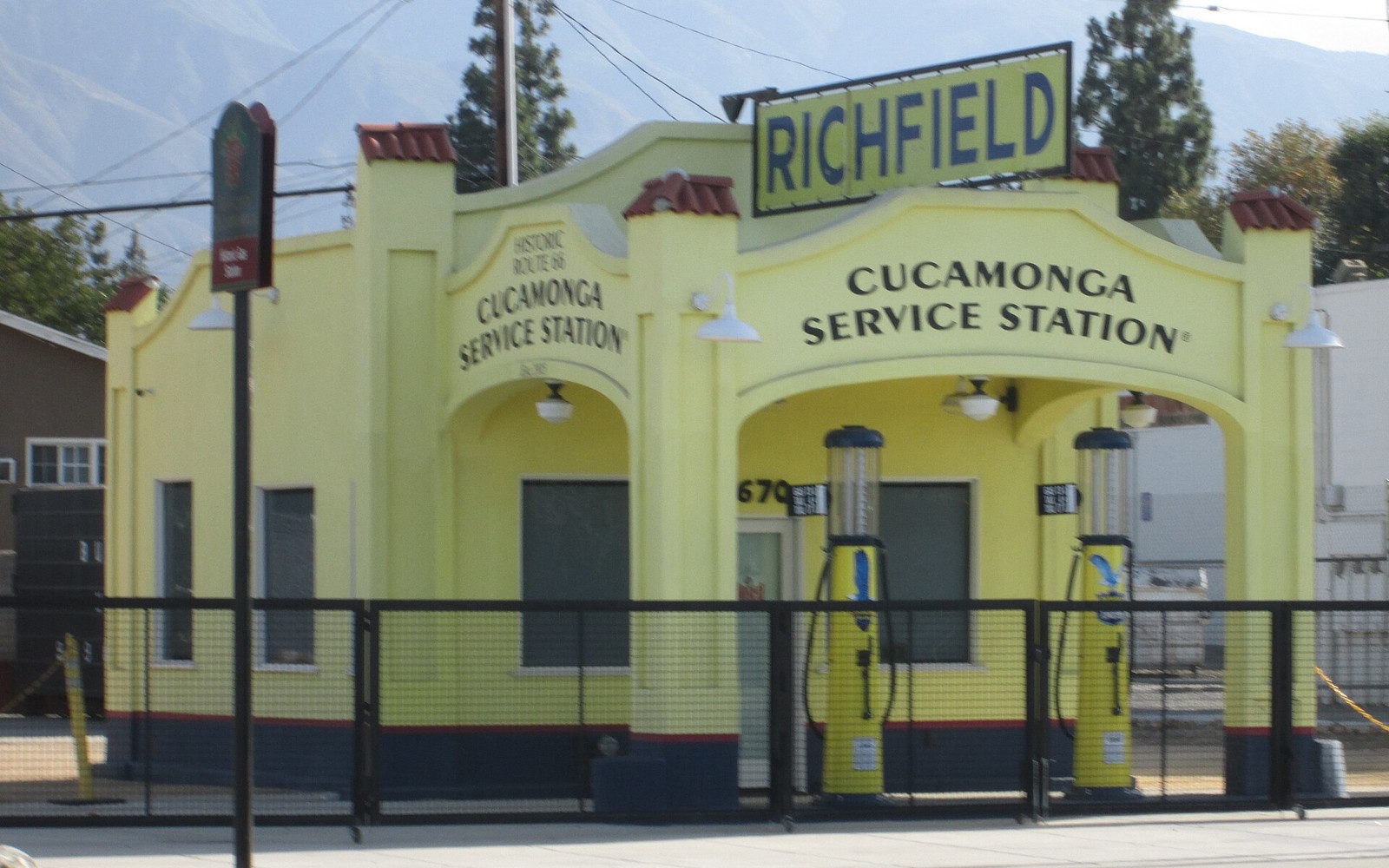
The Cucamonga Service Station preserves Route 66 memory while the city's neighborhoods continue to grow and change.
City or museum historical source ↗
See the history for yourself.
Walk downtown to see surviving commercial architecture, then explore the Historical Preservation Society’s museum and visiting information. Check current opening dates before setting out. Historical Preservation Society.
For deeper research, the Rancho Cucamonga library resources is a starting point for archival material and research help. Historic photographs have their own permissions; we link to the collection instead of treating every old image as free to reuse.
Selected milestones researched September 13, 2026. This is an introduction, not a complete account of the city’s history.